Fast Diffs, Wrong Outcome
Models are trained to produce. Without a thin chain from intent to verification, activity looks like progress while the product moves away from what you needed.
Fast Diffs, Wrong Outcome
The default failure mode isn’t laziness—it’s eagerness. Give a model a fuzzy goal and it will generate: patches, refactors, tests that compile, summaries that sound confident. None of that guarantees you’re building the right thing.
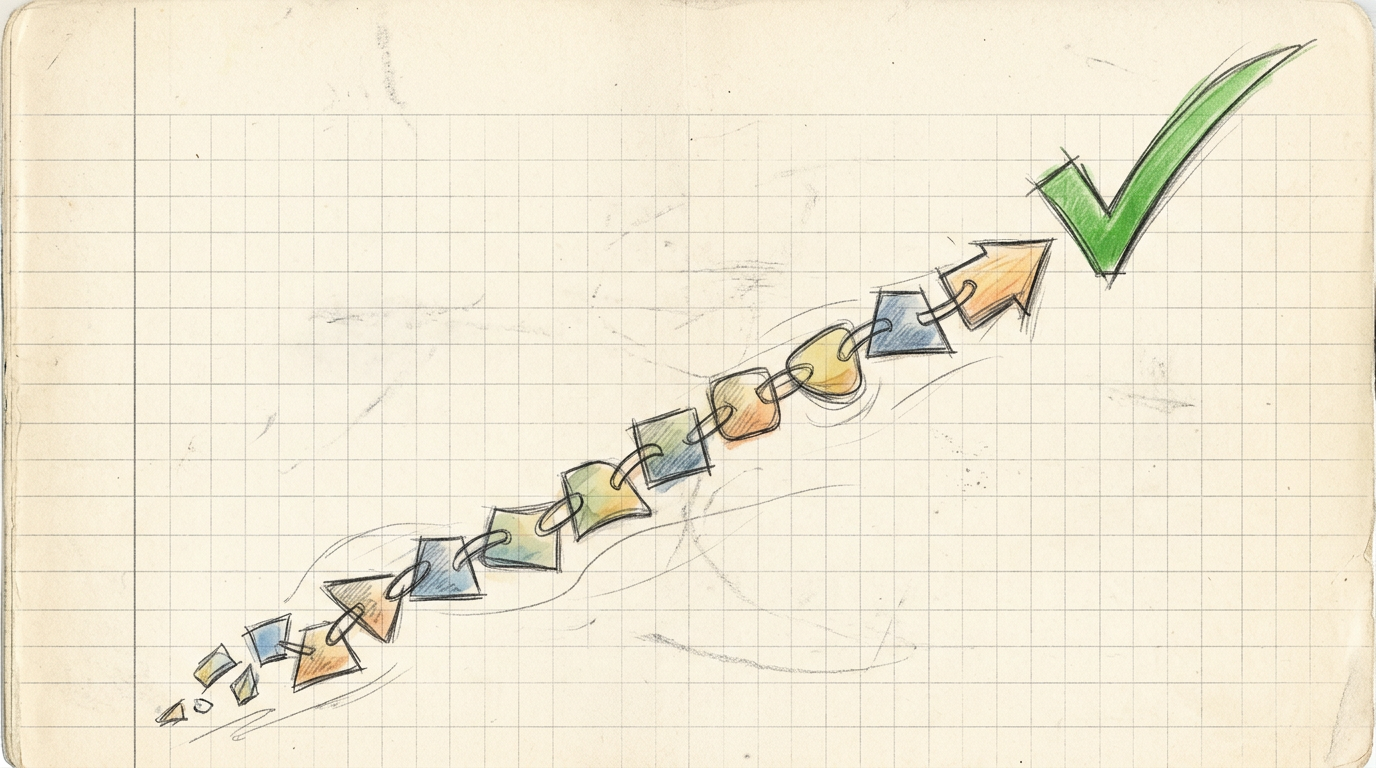
Without a lightweight chain—intent → brief → spec → tasks → verification—work looks productive while shipping the wrong behavior. The team sees motion; the spec was never pinned down.
What helps: the same pauses a disciplined team would take, but materialized—short written artifacts, in the repo, so the next session doesn’t re-negotiate “done” from scratch. Not bureaucracy. A shared contract so the model isn’t improvising the product definition while it codes.
The insight: measure progress by alignment to intent, not by how busy the agent looks.