The Human Lane: Don’t Fake Access
Some steps need a credential, a signature, or a judgment call. The honest pattern is a clear handoff to a person—not a confident hallucination of success.
The Human Lane: Don’t Fake Access
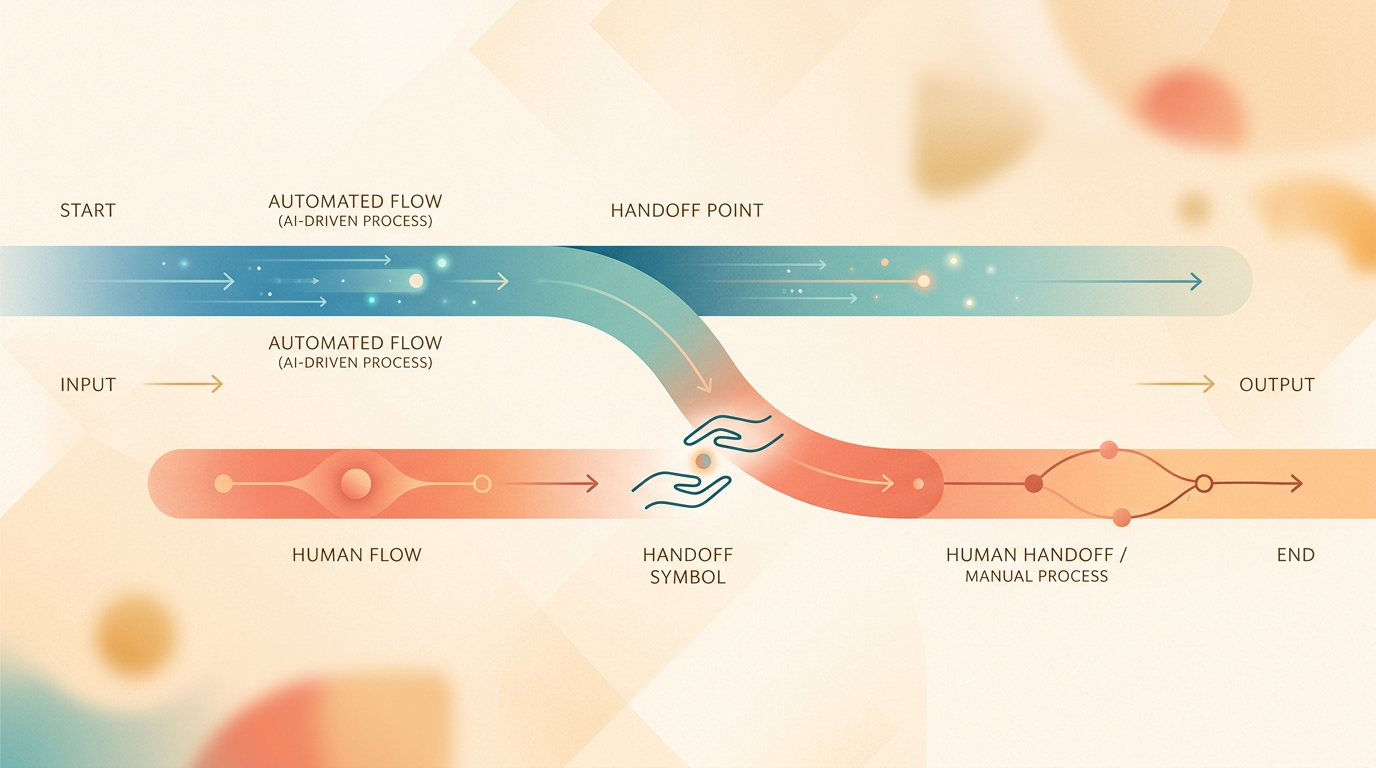
Not everything is automatable. Logins, keys, legal approval, production toggles—some work only a person can do safely. Pretending otherwise burns trust: the system looks done, but nothing was actually authorized.
The pattern that works: a human task lane—explicit handoff (“blocked on X”), what the human must do, what “done” looks like, and how the agent resumes after. Meanwhile the agent keeps working on unblockable tasks that don’t depend on access it doesn’t have.
The insight isn’t “humans are slow.” It’s agents must not claim access or completion they don’t have. Name the gap, route it, validate the return. Hallucinated success is worse than a visible wait state.
The insight: honest limits make automation trustworthy; fake completeness makes it dangerous.