Let the Agent Maintain Itself
Humans hold intent and validation; agents use their own reasoning to tighten rules, docs, and links—so the system that ships the work also gets smarter at shipping.
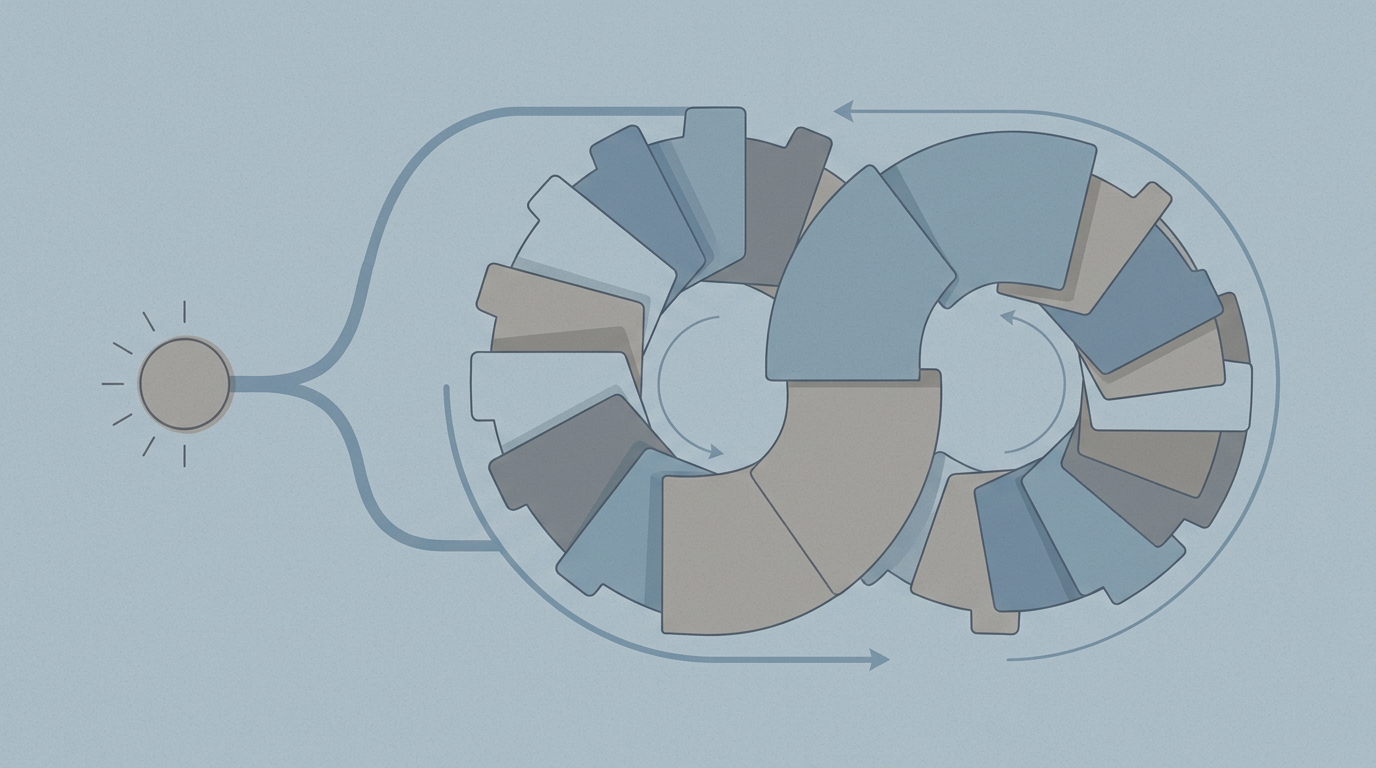
Let the Agent Maintain Itself
Some of the highest-leverage work is boring to humans but easy for an agent to do well if you let it: tighten copy in a template, add a footnote that explains how content is produced, extend an internal guide with a new rule discovered while shipping, wire cross-links between related articles so the Lab reads as one graph instead of isolated pages.
That is not “the model runs wild.” It is a deliberate split: you stay with intent—what should be true, what risk is acceptable, what “done” means—and you let the agent reason through the mechanics: wording, structure, file placement, consistency checks, and “what would make the next run smoother?”
Why it makes you smarter, faster
When the agent updates its own instructions and surfaces (the same repo the next task loads), each correction compounds:
- Playbooks stop drifting from reality because the agent can patch the playbook when reality changes.
- Readers get continuity—footnotes, links, and tone align because one pass can touch page + policy together.
- You spend review energy on judgment (“is this claim true for us?”) instead of on transcription (“add this bullet on line 47”).
You still validate. The loop is: intent → agent proposes full change → human approves or redirects. Nothing magic about skipping that gate for anything that faces users or policy.
Where it breaks if you skip intent
If humans disengage from direction and only react to diffs, you get elegant self-consistency around the wrong goal. Intent is the guardrail; reasoning is the engine. For how “alignment beats raw autonomy” in practice, see Optimize for Alignment, Not Autonomy—same studio, different emphasis.
Related threads
We have written before about self-maintenance as architecture at the Nimbus level in How Nimbus Maintains Itself. This note is the smaller, everyday version: let the agent maintain the artifacts it runs on—including instructions—while you keep the why and the yes/no.
When those artifacts live in the repo as durable context, the pattern fits naturally with Living Memory for Your Project: the agent is not “remembering” in chat; it is editing the memory you already decided to trust.
The insight: hold the intent, run the review—let the agent use its reasoning to make its own runway longer.